
This is an age-old question.
Leather has been part of human civilization for thousands of years. It converts a natural byproduct of the livestock industry into valuable products used across the world — footwear, garments, gloves, upholstery, and many other applications.
If leather is such a valuable commodity, then why is Pakistan’s leather industry facing a prolonged slump?
The answer is not a lack of demand. The global leather market continues to exist. The challenge lies in the weaknesses of the ecosystem that supports leather production.
Availability and Quality of Raw Materials — The First Challenge
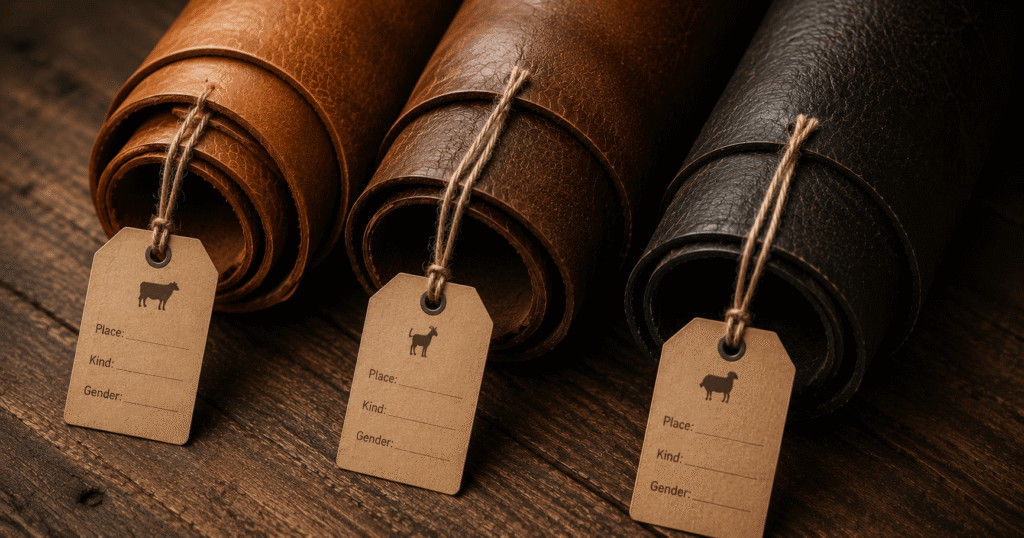
In 2025, during Eid-ul-Adha, millions of animals were sacrificed across Pakistan. This created a natural opportunity where a valuable industrial input became available through a religious and social activity.
However, instead of becoming an economic opportunity, the issue often becomes politicized.
According to the Pakistan Tanners Association, approximately 6.7 million animals were slaughtered during Eid-ul-Adha 2025. The important question is:
How many of these skins were properly collected, preserved, and converted into useful leather?
Looking at Pakistan’s leather exports during 2024-2025, the industry exported approximately:
- 91 million square feet of finished leather
- 24 million leather garments
- 118 million pairs of gloves
- 108 million pairs of shoes
Clearly, the skins obtained during Eid alone cannot fulfill the requirements of Pakistan’s leather industry. As a result, Pakistan imports raw hides and skins throughout the year from countries including Saudi Arabia, Australia, New Zealand, Iran, and other regions.
However, the challenge is not only the quantity of skins available — it is also their quality.
Raw hides and skins are perishable commodities. Their value depends heavily on how they are handled immediately after slaughter. Damage caused by poor flaying techniques, delayed preservation, improper storage, animal diseases, and environmental exposure directly reduces their commercial value.
A poor-quality raw hide can never become premium leather regardless of how advanced the tanning process is.
Therefore, improving livestock management, slaughtering practices, collection systems, and preservation methods is essential if Pakistan wants to increase exports and earn valuable foreign exchange.
Dependence on Imported Chemicals — The Second Challenge
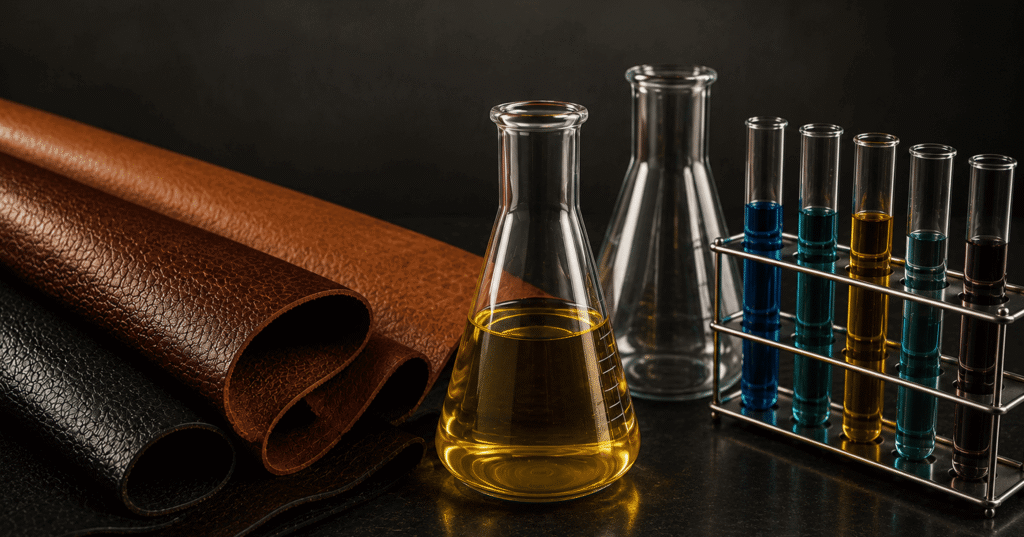
Leather manufacturing is a highly technical industry requiring specialized chemicals at every stage.
Unfortunately, Pakistan remains heavily dependent on imported chemicals from countries such as China, Germany, Italy, and Turkey.
The chemicals required include:
- Fat liquors for softness and lubrication
- Chrome salts for tanning
- Bating enzymes
- Dyes
- Polymers for tanning and finishing
- Pigments
- Fixing agents
- Polishes and finishing chemicals
Despite having a historic leather industry, Pakistan has not developed a strong chemical manufacturing base to support this sector. We neither produce most of these specialized chemicals locally nor possess sufficient raw material infrastructure for their production.
The withdrawal of zero-rating of sales tax increased the working capital burden on exporters. Since leather manufacturers must import expensive inputs, taxation on these imports creates additional financial pressure and affects competitiveness.
Shortage of Skilled Manpower — The Third Challenge
Leather is not merely a manufacturing activity; it is a technical science requiring knowledge of chemistry, engineering, quality control, and product development.
Unfortunately, Pakistan’s leather education infrastructure has weakened considerably.
The National Institute of Leather Technology (NILT), established in 1996, was once a symbol of Pakistan’s ambition to become a regional center for leather education.
Located in Korangi Sector 7A, Karachi, the institute was supported by leading industrialists of the 1990s, including my father, Mr. Mohammad Saleem Ahmed, CEO of Pak Leather Crafts Limited.
The institute was inaugurated by the Prime Minister of Pakistan, Mian Muhammad Nawaz Sharif.
During its active years, students from African and Asian countries came to Pakistan to study leather technology. Unfortunately, due to declining resources and institutional neglect, NILT became inactive.
Today, a valuable educational asset located in a prime industrial area remains underutilized.
Pakistan does have a Leather Technology Institute in Gujranwala producing graduates, but this alone is insufficient to support an industry that has the potential to become a $5 billion export sector.
A modern leather industry requires:
- Leather technologists
- Chemists
- Product developers
- Quality specialists
- Environmental experts
- Production managers
Without skilled manpower, industrial growth cannot be sustained.
Energy Costs — A Challenge Beyond Industrial Control
The fourth challenge is the cost of power and utilities.
Manufacturing competitiveness depends heavily on energy costs. Pakistan’s industrial electricity prices have increased significantly, making it difficult for exporters to compete with regional manufacturing hubs. During the 1990s, European brands considered Pakistan an important destination for leather manufacturing and sourcing. Pakistani craftsmanship had a strong reputation internationally.
However, countries such as China, India, Bangladesh, Vietnam, and Indonesia gradually captured market share through:
- Lower energy costs
- Better infrastructure
- Government support
- Larger manufacturing ecosystems
Pakistan has gradually moved from being a preferred manufacturing destination to competing mainly on price rather than innovation and efficiency.
Taxation and Regulatory Burden — The Fifth Challenge
Industrialists contribute taxes and operate under extensive regulatory scrutiny. However, the increasing compliance burden and taxation structure have affected investment and expansion.
The Government of Pakistan introduced the Pakistan Single Window system to simplify trade procedures. While this initiative has improved certain processes, it alone cannot solve the larger competitiveness issues faced by exporters.
Export incentives remain limited. The majority of value addition occurs in the tannery, where raw hides are converted into finished leather. However, incentives are generally focused more toward finished products rather than strengthening the tanning foundation.
Furthermore, corporate income tax rates, additional taxes, and compliance costs make it increasingly difficult for Pakistani manufacturers to compete internationally.
Currency Volatility — The Sixth Challenge
The continuous volatility of the USD/PKR exchange rate creates another layer of uncertainty.
Exporters commit prices with international buyers in US dollars. However, between the time of order confirmation, production, and receipt of payment, exchange rate movements can significantly affect profitability.
If the Pakistani rupee strengthens, exporters receive fewer rupees against their export proceeds while facing increased costs from imported chemicals and machinery.
Conversely, when the rupee depreciates sharply, exporters may temporarily benefit, but this creates uncertainty rather than sustainable competitiveness.
A stable currency environment is essential for long-term industrial planning.
Global Perception and Industry Structure — The Seventh Challenge
Pakistan’s leather industry also faces a perception challenge.
Internationally, Pakistan is often associated with mid-tier leather products rather than premium leather goods.
This perception is linked to several factors:
- Limited availability of premium raw hides
- Weak livestock management systems
- Lack of traceability
- Limited branding
- Insufficient investment in product development
Leather and livestock farming in Pakistan remain largely traditional industries. The sector consists mainly of small and medium-sized businesses, with limited participation from large-scale organized players.
To compete globally, Pakistan must move beyond being only a leather processor and develop a complete ecosystem — from animal farming to finished branded products.
The Way Forward
Pakistan’s leather industry is not suffering because leather has lost its value. The world still demands leather products.
The problem is that the ecosystem supporting leather production has weakened.
The revival of this sector requires:
- Better livestock management
- Improved hide collection systems
- Local chemical industry development
- Revival of leather education institutions
- Competitive energy policies
- Stable taxation policies
- Investment in technology and sustainability
- Stronger international branding
Leather remains one of Pakistan’s most valuable natural resources. With the right policies and industry collaboration, it can once again become a major contributor to exports, employment, and economic growth.